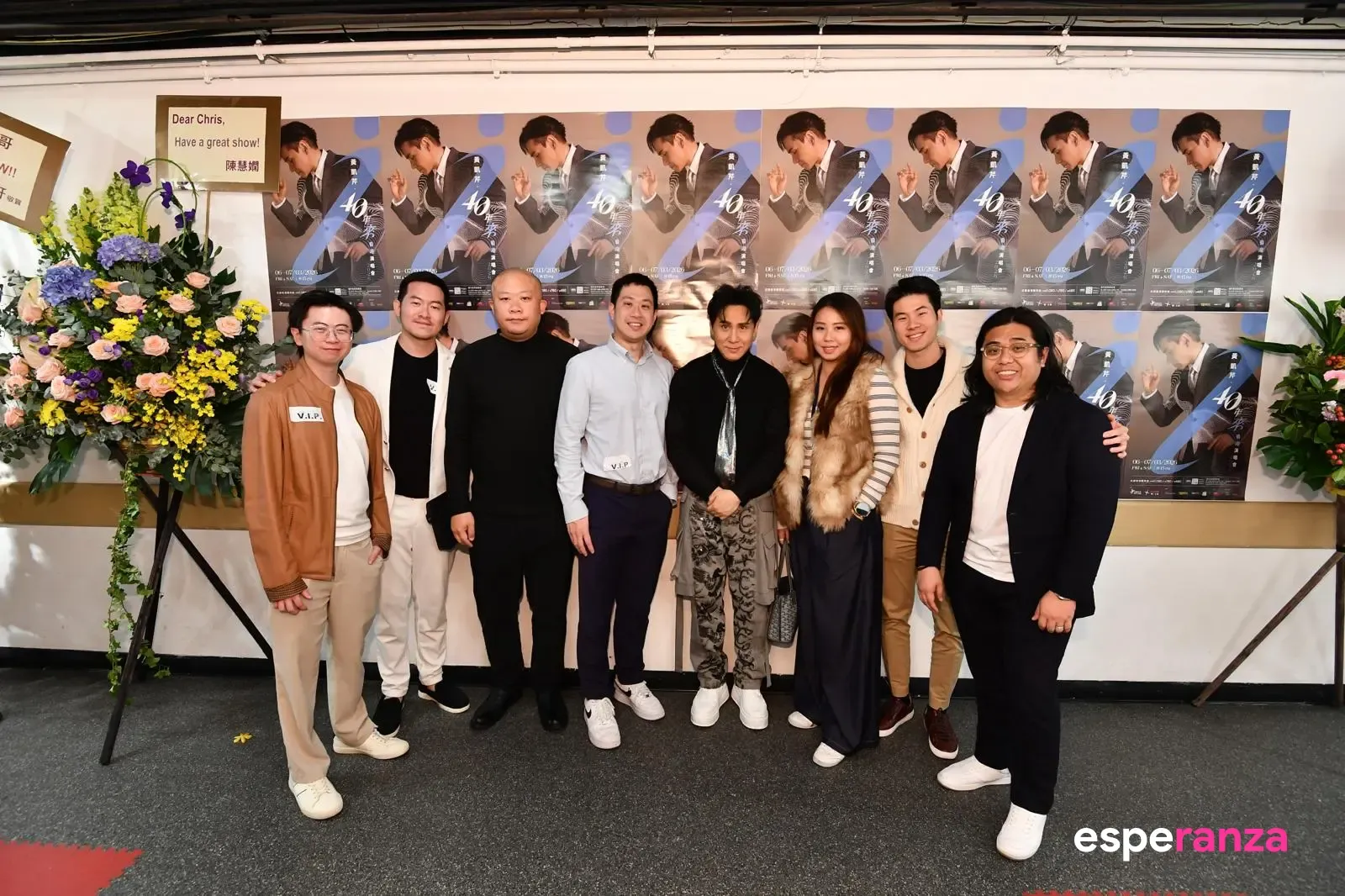
Esperanza Securities has announced a major milestone for its inaugural SFC-permitted entertainment STO, following the successful completion of the underlying Chris Wong 40th Anniversary Concert in Hong Kong.
According to the company, the project represents one of Hong Kong’s first practical cases of a tokenized entertainment investment that combines secondary market trading with exclusive experiential access. Participating investors were given exposure not only to the financial structure of the project, but also to selected behind-the-scenes experiences including concert rehearsal access, opening ceremony participation, and backstage interaction with the artist.
Esperanza stated that the STO successfully attracted subscription from professional investors, with trading now available on its 24/7 digital investment platform, Espetopia. The platform has already recorded secondary market activity from both institutional and individual professional investors, marking an important step in testing tokenized structures as an alternative capital-raising channel for live entertainment assets.
The company also noted strong interest from the wider market. While entertainment STO participation remains restricted to professional investors under current rules, Esperanza reported that a meaningful number of retail investors have expressed interest in future access to tokenized entertainment investment opportunities. The company positioned this as part of a broader regulatory trend, citing ongoing international discussions about retail participation in private market assets.
Following the completion of the Chris Wong project, Esperanza also announced that its next entertainment STO would soon become available for subscription and secondary trading for eligible professional investors. The upcoming underlying asset is the K-Sarang Super Concert in Kuala Lumpur, featuring Kyuhyun of Super Junior and AHOF, scheduled for April 11, 2026.
Looking ahead, Esperanza indicated that it plans to expand tokenized investment applications across a wider range of entertainment and creative-sector assets, including film production, content rights, and intellectual property licensing. The development adds to the growing market discussion around how tokenization may connect capital participation more directly to cultural assets and fan-linked commercial ecosystems.
[Press Room]